
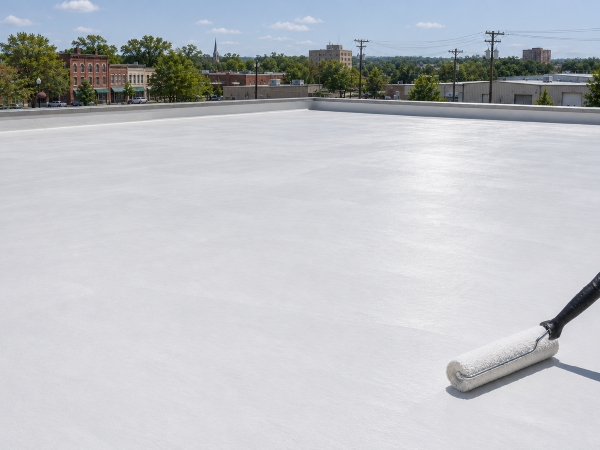
Flat roof sealing is a targeted way to address certain seams, flashings, penetrations, terminations, and other localized details on a commercial roof. For property owners in Livonia, MI, the useful questions are what exactly gets sealed, which materials suit the roof and when sealing is enough on its own. Sealing can fit specific, well-defined defects when the surrounding roof and substrate remain suitable. It does not by itself correct broad moisture involvement, widespread membrane failure, or structural drainage problems.
Incore Restoration Group works on commercial flat roofs across Southeast Michigan and offers coating and restoration services alongside repair. For help deciding what a Livonia roof needs, call 866-685-0009.
What Flat Roof Sealing Covers
Sealing means addressing specific roof details where gaps, cracks, failed sealant, or compatible repair materials are needed to restore weather protection. On a commercial flat or low-slope roof, those places are usually details rather than the open membrane. Typical sealing targets include:
- Seams where sheets or laps have started to lift or open
- Flashings at walls, curbs, parapets and roof edges
- Penetrations such as pipes, vents, conduits and rooftop unit supports
- Terminations and edge metal where the membrane stops
- Drain bowls and the areas around them
- Small cracks or pinholes in the surface
These details can be affected by movement, weathering, attachment, rooftop equipment, and prior repairs. Their condition should be evaluated in context with the surrounding membrane and substrate.
Matching the Sealant to the Roof
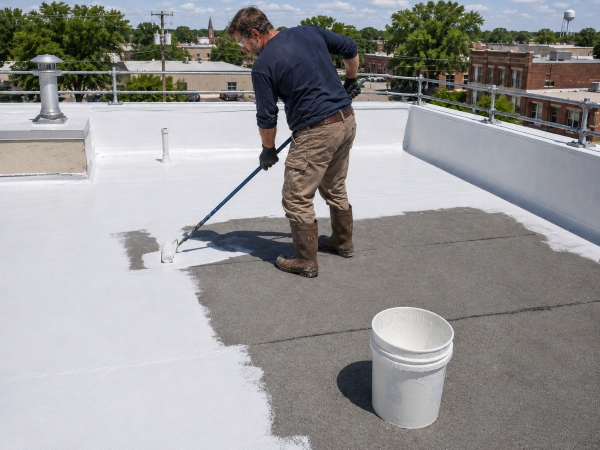
Sealants, primers, tapes, and reinforcing materials must be compatible with the specific roof system and the surfaces being treated. Livonia commercial buildings carry a mix of systems, including EPDM, TPO, PVC, modified bitumen and built-up roofs, and the right sealing materials differ between them. A material suited to one roof type may not be appropriate for another, so compatibility should follow the selected roof-system and manufacturer requirements.
For that reason, the existing roof system and detail condition should be identified before repair materials are selected. Primers, sealants and reinforcing fabrics are chosen to be compatible with that membrane and with each other. Single-ply roofing in Livonia and bituminous roofs are treated differently, and the choice of materials follows from what is actually on the roof.
Preparation Decides How Long Sealing Lasts
Contamination, loose material, surface moisture, and poor preparation can interfere with adhesion. Good preparation usually includes:
- Cleaning the area and removing loose debris, old failed sealant and surface contamination
- Allowing the surface to meet the selected material’s dryness and moisture requirements
- Priming where the sealant manufacturer calls for it
- Reinforcing seams and corners with fabric or tape where the design allows
- Applying the sealant at the thickness and coverage the product requires
The preparation steps and installation requirements should follow the selected material and roof system so the repair is not relying on unsupported adhesion or incompatible components.
Weather and Timing in Michigan
Sealants, primers, tapes, and related repair materials have application, temperature, moisture, and cure requirements that can limit when permanent work is appropriate. In Michigan, timing should follow the actual weather, roof-surface condition, and product requirements rather than a fixed seasonal rule. When water is actively entering and permanent work cannot be completed immediately, temporary weather protection may be appropriate until conditions allow the planned repair. Incore Restoration Group offers 24/7 emergency response for urgent roofing situations.
Sealing, Repair, Coating or Replacement
Sealing is one tool among several. The right choice depends on the condition of the roof, and the table below shows how the options generally compare.
| Option | Best suited to | What it involves |
|---|---|---|
| Sealing | Localized detail defects where the surrounding roof, substrate, moisture condition, and compatible materials support sealing | Targeted detail work after preparation, with compatible materials and reinforcement where required |
| Membrane repair | Splits, punctures, failed seams, separated flashings, or other defects that require membrane or flashing repair rather than sealant alone | Patching, seam repair or flashing replacement, then sealing the surrounding details |
| Coating | Broader surface weathering where moisture, adhesion, substrate, drainage, and compatibility support restoration | A fluid-applied coating system over a prepared roof, with repair and detail work completed as required by the system |
| Replacement | Broad moisture involvement, widespread deterioration, attachment or substrate problems, or recurring failures across multiple areas | Replacement or another broader roof-system scope based on the documented conditions |
Sealing and coating often work together. When a roof is a candidate for coating, seams, flashings, penetrations, and other details are prepared or repaired as required by the selected restoration system. Owners comparing those paths can read about roof coating in Livonia. If deterioration, moisture, attachment, or substrate problems are too broad for a limited repair or restoration scope, flat roof replacement in Livonia may need to be compared.
What Should Be Confirmed Before Sealing
A proposal should identify the existing roof type, the exact details being sealed, the preparation required, the compatible repair materials, and whether any moisture or substrate concerns need separate investigation. It should also distinguish a localized sealing scope from membrane repair, coating, or replacement so the owner can see what the work is expected to address and what remains outside the scope.
Checking the Work
Completed sealing work should be checked against the intended repair scope. After the work is done, repaired details can be reviewed for continuity, coverage, adhesion where applicable, and whether the documented locations match the completed scope. Keeping a record of repaired details can make later inspections more useful when comparing recurring or changing conditions.
Flat Roof Sealing in Livonia
Livonia roofs can face snow, freezing and thawing, rain, wind, and summer heat, all of which can expose weaknesses in roof details over time. Owners looking for a wider view of services can review commercial roofing services in Livonia, and Incore’s overview of commercial roof coatings explains the restoration side. Incore Restoration Group has more than 17 years in business. Current contact information is available from Incore Restoration Group for Livonia commercial roof evaluations.
Frequently Asked Questions
What is flat roof sealing?
It is the process of closing small openings on a flat roof, such as seams, flashings, penetrations and edges, with sealants and reinforcement matched to the roof system.
How long does flat roof sealing last?
There is no single service-life figure for every sealing repair. Performance depends on the roof system, defect, preparation, compatible materials, installation, movement, drainage, exposure, and maintenance.
Can a wet roof be sealed?
Surface conditions must meet the selected material’s requirements. If concealed moisture or wet insulation is suspected, that condition should be evaluated before deciding whether sealing, repair, coating, or a broader scope is appropriate.
Is sealing the same as roof coating?
No. Sealing addresses specific details, while a coating is applied across a broader roof surface. The two can be part of the same restoration scope when the roof and selected system support it.